We secured discontinuance of a criminal investigation for driving under the influence of psychoactive substances, against a background of continuing practical difficulties in the preparation of forensic toxicology reports.
Although High Court Decision No. 25/2025 established that criminal liability requires proof of actual influence by psychoactive substances, some forensic reports still give generic conclusions without clearly explaining the specific significance of the toxicology findings.
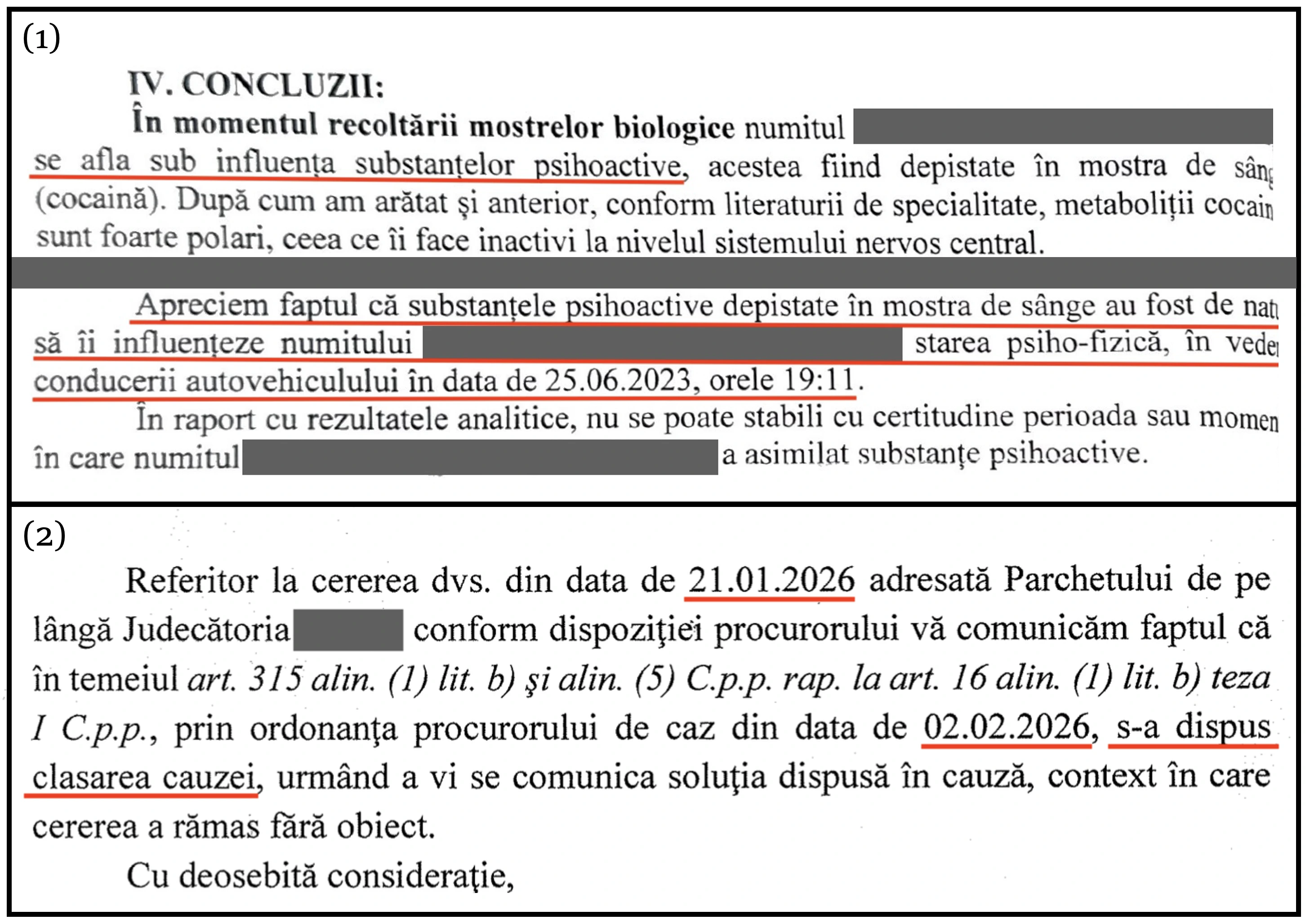
In this case, the forensic toxicology report (image 1) concluded that the driver was under the influence, although the detected concentrations were, according to specialist literature, far below levels associated with active pharmacological effects.
Starting from this discrepancy, we rigorously reviewed forensic toxicology literature and found that the report's conclusions lacked verifiable scientific support. We submitted objections and requested a supplementary report with specific, scientifically reasoned explanations of the true forensic significance of the detected concentrations.
The prosecution subsequently discontinued the case (image 2) under Article 16(1)(b), first sentence, of the Criminal Procedure Code, finding that the conduct was not a criminal offence: without actual impairment, the statutory elements were not met, despite the opposite conclusion in the forensic report.
The outcome confirms that a forensic report is not decisive in itself and must be critically assessed where it lacks an adequate scientific basis. Even an unfavourable report can be overcome through rigorous legal and scientific analysis.
Legal representation in this case was provided by lawyer Mihai Bunu.